
Why Landowners Choose to Sell Land in New Mexico
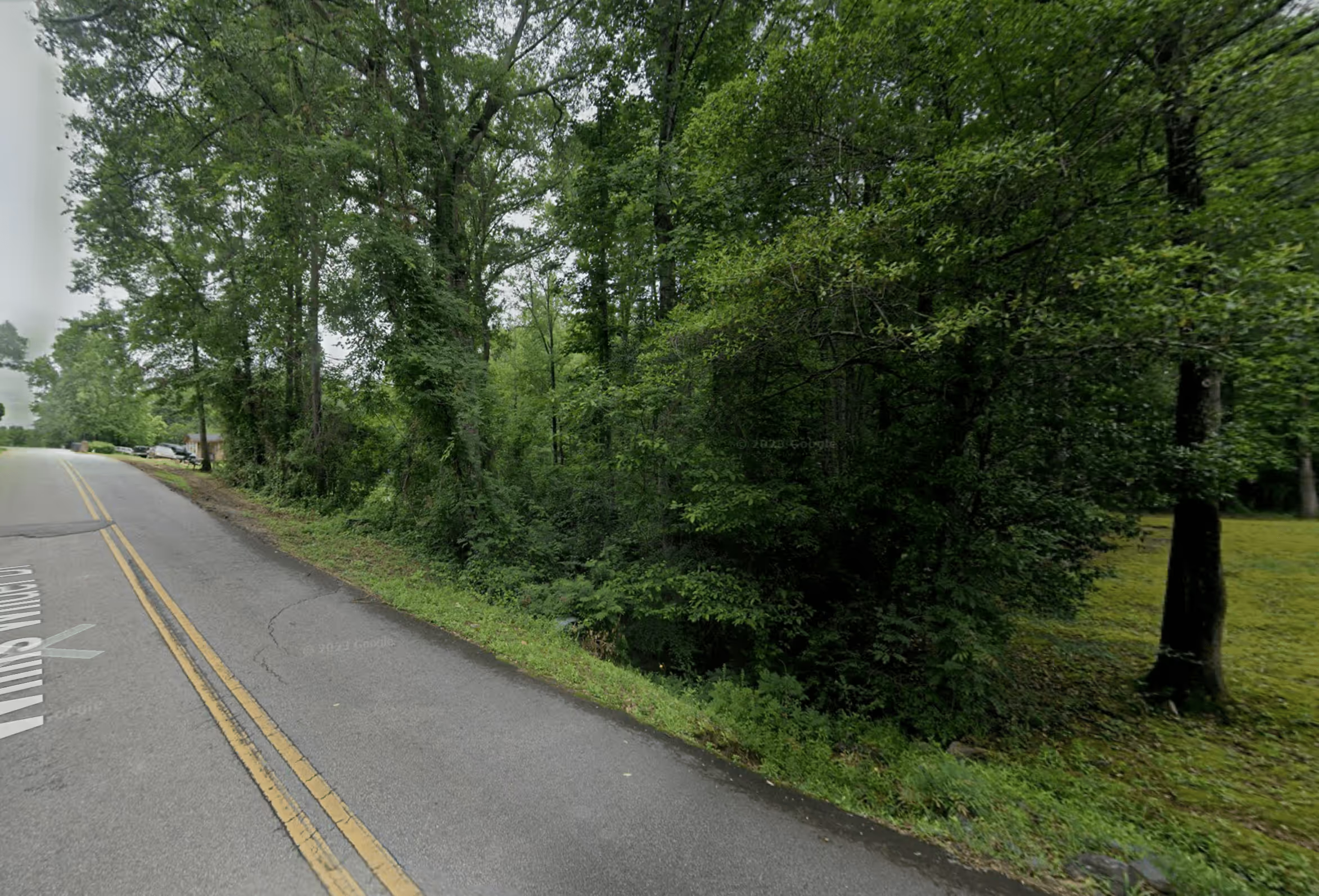
If you own vacant or undeveloped land in New Mexico and have been wondering, “how do I sell my land quickly and simply?”, this article is for you. In this guide, we’ll walk through what it takes to sell land in New Mexico, why some landowners opt for cash buyers over the traditional route, and practical tips to make sure you get a fair deal. Whether your motivation is financial, personal, or purely logistical, knowing your options will help you decide how to best move forward.
New Mexico is a state filled with wide open spaces, varied terrain, and many parcels of vacant, raw property that often remain undeveloped. But owning unused land comes with costs and burdens. Here are some of the most common reasons people decide to sell:
- Financial pressure or need for liquidity. Perhaps an unexpected expense came up, or a better investment opportunity appeared elsewhere. Selling land for cash can deliver funds fast.
- High maintenance and carrying costs. Property taxes, legal fees, or upkeep can drag on, especially for remote parcels. Some owners prefer to eliminate that ongoing burden.
- Life changes and relocation. A job transfer, family considerations, or other life transitions might make maintaining distant land impractical.
- Inherited or unwanted property. Heirs or beneficiaries often find themselves owning land they didn’t originally plan on keeping, so selling becomes the simplest path.
- Market timing. When demand for land is strong, owners may see this as a window to convert their asset into cash.
- Shifting use or zoning. If land use regulations or local development patterns change, a parcel that once made sense to hold may no longer align with your goals.
Understanding why you want to sell is important — it can shape the approach you take, your urgency, and how much flexibility you’ll have in negotiating.
Challenges of the Traditional Land-Selling Route in New Mexico
If you list your land via a real estate agent or try to market it independently, you’ll likely face several obstacles:
- Time-consuming listing and marketing. You’ll have to evaluate comparable sales, hire agents, market broadly, and wait for interested buyers to emerge.
- Uncertainty in offers. Interested buyers might propose wildly different prices or request expensive contingencies or inspections.
- Hidden costs and commissions. Real estate commissions, closing fees, or title and transfer costs can eat into your net proceeds.
- Extended waiting periods. Deals can stall due to inspections, title issues, financing concerns, or simply lack of buyer interest.
- Difficulty with remote lands. Parcels without road access or in rural counties may attract fewer buyers, requiring more effort to market.
- Carrying costs while you wait. You continue to pay taxes, insurance, and possibly legal or survey costs while the land remains unsold.
For many landowners, the combination of these challenges outweighs the benefits of trying to extract the absolute last dollar via a traditional route. That’s why an increasing number choose to go the direct-cash route instead.
Selling Your Land for Cash: How It Works in New Mexico
When you work with direct land buyers or investors, the process is simpler, faster, and more predictable. Here’s what typically happens:
Step 1: Provide Property Information
You submit basic details about your parcel: location (county, township, etc.), acreage, access (road or easement), utilities (if any), and any known issues like back taxes or liens.
Step 2: Evaluation & Offer
The buyer conducts a market and title check, then formulates a cash offer. In many cases, the buyer is willing to consider parcels “as-is,” meaning you don’t have to fix or clear anything.
Step 3: Agreement & Paperwork
Once you accept the offer, the buyer handles title work, closing costs, and transaction details. Often a mobile notary is used to make signing easier for remote sellers.
Step 4: Close & Payment
You receive funds (via wire transfer, cashier’s check, or other agreed-upon method), and ownership is transferred to the buyer.
This streamlined approach eliminates many of the common headaches of real estate selling: you skip lengthy listing periods, eliminate the uncertainty of buyer financing, and avoid many of the hidden costs.
One key benefit is speed. Some cash buyers can present a binding offer within days and close shortly thereafter — far faster than traditional sales, which can stretch into weeks or months.
What to Look for When Selecting a Cash Buyer
If your goal is to “sell my land” quickly and fairly, you should vet prospective buyers carefully. Here are criteria to keep in mind:
- Reputation and transparency. Look for buyer reviews, testimonials, or references. A trustworthy buyer won’t hesitate to share credentials or past deals.
- Local expertise. Someone knowledgeable about New Mexico land markets, county norms, and regional regulations is more likely to make a fair offer.
- Full cost coverage. The buyer should ideally cover title searches, transfer costs, closing fees, and other customary expenses.
- No hidden fees. Watch for lowball offers or surprise deductions after you’ve agreed to sell.
- As-is purchase willingness. The ability to accept your land in its current state offers major convenience.
- Fast timelines. If your goal is speed, pick a buyer willing to close quickly (some in as little as two business days).
- Clear contract. The agreement should be transparent, fair, and free of onerous contingencies or cancellation penalties.
By doing your due diligence from the start, you enhance your chances of a smooth and satisfying transaction.
How to Sell Your Land in Specific New Mexico Counties
New Mexico is segmented into many counties — from Bernalillo (which includes Albuquerque) to Doña Ana, Chaves, Santa Fe, Taos, Sandoval, and more. Because real estate markets and land demand vary widely across these counties, a cash investor familiar with multiple New Mexico counties often gains an advantage.
Whether your land is in Cibola, Valencia, San Juan, or any of the rural counties farther afield, a motivated buyer willing to operate statewide is often better equipped to assess your parcel fairly and handle local legal intricacies. That means you don’t have to limit your options to only county-level agents or local brokers. You can cast a broader net, but still choose a buyer who understands the unique factors influencing land value in each county — such as water rights, access roads, zoning, mineral rights, and utilities.
Tips to Maximize Your Sale Price (Even with a Cash Buyer)
While cash buyers usually offer somewhat below retail market rates (in exchange for speed and convenience), there are some ways you can improve your bottom line:
- Gather documentation ahead of time. A clean title, surveys, tax history, and any easement records will reduce buyer risk and strengthen your negotiating position.
- Clarify access and utilities. If your land has documented road access or utility connections (even partial), highlight them.
- Inspect for encumbrances. Clear up any delinquent taxes, liens, or legal issues prior to entering offers.
- Get multiple offers. Even among cash buyers, differences in offer structure and terms can lead to significantly different results.
- Highlight selling points. If your parcel is near a highway, close to amenities, or in a desirable growth corridor, make sure the buyer understands the upside.
- Be flexible on closing. Sometimes offering to cooperate on minor logistics can persuade a buyer to raise their offer.
- Negotiate on fees. Ask that closing, title, or transfer costs be paid by the buyer. These can add up.
By doing a little prep, you reduce the buyer’s perceived risk (and that helps your price) while preserving the speed and simplicity that drew you to the cash option in the first place.
A Realistic Example: How Someone Sells Their Land
Imagine you own 10 acres of desert land in Torrance County, New Mexico. You live out-of-state and don’t want to manage upkeep or remote oversight. You fill out a simple property form, upload photos and basic description. Within two days, you receive a firm cash offer. You agree. The buyer orders a title search, handles paperwork, and coordinates a signing via mobile notary. Within a week or two, funds land in your account — you’re free of property taxes and remote management responsibilities. That’s how clean a direct-cash deal can be.
Even if the offer is a little lower than a full retail listing, the savings in time, stress, and transaction costs often offset that difference — especially when your priority is to sell my land and move on.
When a Traditional Sale Might Still Make Sense
While selling for cash is powerful and convenient, it’s not the right choice in all cases. You might prefer a traditional listing if:
- Your land is in a high-demand area where retail buyers might pay a premium.
- You want to wait for the highest possible market offer and are not in a hurry.
- You have clear title, good access, utilities, and attractive features that might entice developers or retail buyers.
- You enjoy managing the listing process or are willing to pay an agent for that service.
- You’re not in a rush and willing to take carry costs for a longer timeframe.
In these cases, the traditional route might yield more money — but it also comes with added complexity, time, and uncertainty.
In Summary: How to Sell Your Land Efficiently in New Mexico
Selling land in New Mexico doesn’t have to be a drawn-out, expensive ordeal. For many landowners, the best approach is to sell my land directly to a credible cash buyer. This path usually means:
- A fast and binding offer
- Minimal paperwork and no necessary improvements
- Buyer-covered costs like closing, title work, and transfers
- The ability to close in just days instead of weeks or months
If you’re serious about converting your land into cash and want certainty and speed, this is a compelling route to explore. Just remember: vet buyers, push for transparency, and choose someone who understands New Mexico’s land markets across counties.