
The Advanced Guide to Home Improvement for Beginners: Level Up Your Living Space
“`html
The Advanced Guide to Home Improvement for Beginners: Level Up Your Living Space
Entering the world of home improvement can feel like stepping into a foreign land. Between the aisles of power tools and the complex jargon of contractors, many homeowners feel stuck between “doing nothing” and “paying a fortune.” However, there is a middle ground. This advanced guide for beginners is designed to bridge the gap between basic maintenance and professional-grade DIY projects, helping you increase your property value and personal comfort.
1. Shifting the Mindset: From “Fixing” to “Improving”
Most beginners start home improvement because something broke. While reactive maintenance is necessary, true home improvement is proactive. It’s about identifying the potential of a room and executing a plan to enhance its aesthetics, functionality, and efficiency. Before picking up a hammer, ask yourself: Does this change make my life easier, or does it add 10% to the home’s resale value? If the answer is both, you’ve found a winning project.
2. Building the “Pro-Level” Beginner Toolkit
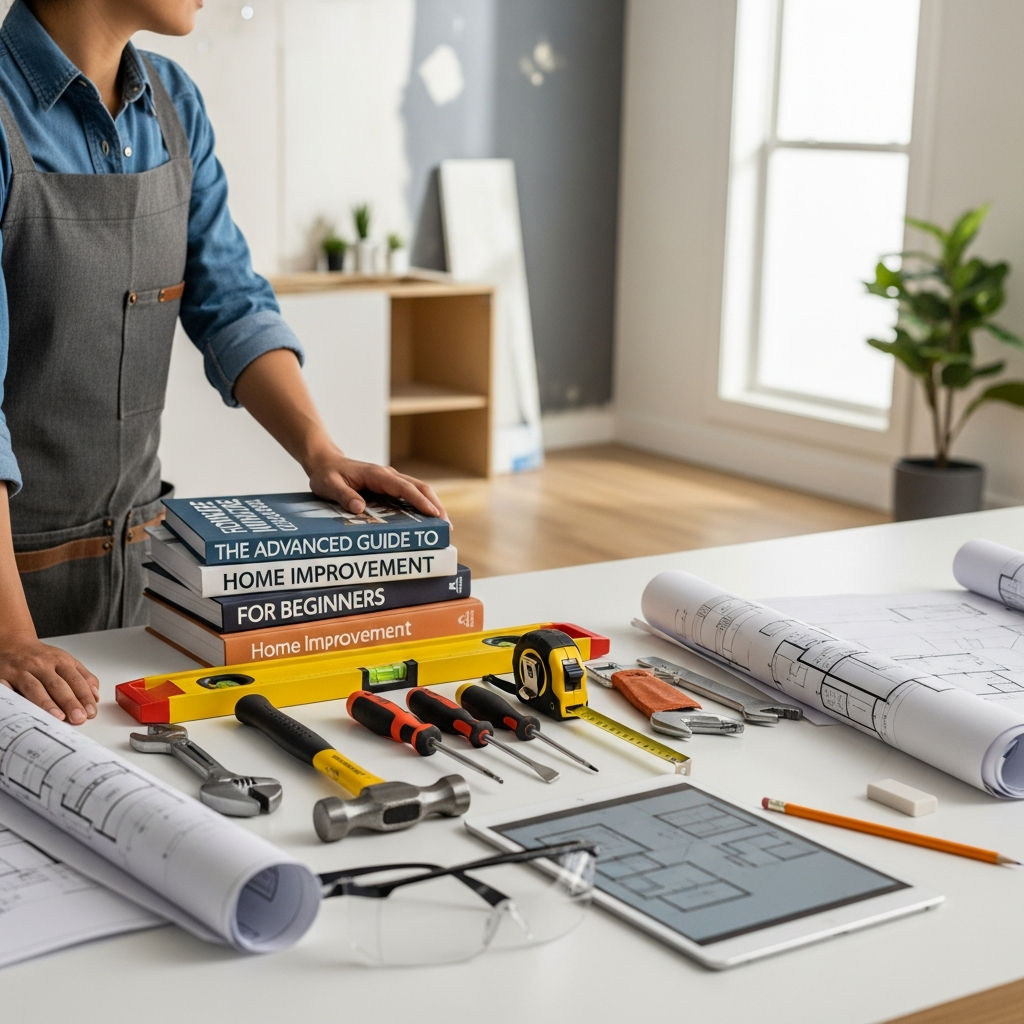
You cannot do a professional job with a bargain-bin screwdriver set. To move beyond simple tasks, you need a foundational toolkit that balances quality with versatility. Avoid the “complete kits” sold at big-box stores; instead, buy these essentials individually:
- Impact Driver and Drill Combo: A brushless motor set will provide the torque needed for everything from hanging heavy shelves to building a deck.
- A 4-Foot Level: Beginners often rely on “eye-balling” it. Professionals use levels. A 4-foot level ensures your cabinets, shelves, and curtain rods are perfectly straight.
- The Multi-Tool (Oscillating Tool): This is the “secret weapon” of home improvement. It sands, cuts drywall, removes grout, and trims door casings with precision.
- Quality Measuring Tape: Look for one with a “standout” of at least 10 feet so you can measure long spans without a partner.
3. Master the Art of the “Professional” Paint Job
Painting is the most common DIY project, yet it is rarely done correctly by beginners. To achieve an advanced finish that doesn’t look like a DIY job, follow these steps:
- Preparation is 90% of the work: Professional painters spend hours taping off edges, filling “nail pops” with spackle, and sanding surfaces smooth. Never paint over dust or grease.
- Use Primer: Especially when going from a dark color to a light one, or when painting over “builders’ grade” flat paint. Primer ensures the topcoat sticks and the color is true.
- Invest in High-End Brushes: A $20 synthetic brush from a reputable brand (like Purdy or Wooster) will last years and won’t leave bristles stuck in your fresh paint.
- Don’t Forget the Ceiling: A “bright white” ceiling can make a room feel two feet taller and significantly cleaner.
4. Upgrading Hardware: The “Jewelry” of the Home
One of the most cost-effective ways to modernize a kitchen or bathroom is to replace the hardware. Beginners often overlook this because it seems “too small,” but it creates a massive visual impact.
- Cabinet Pulls and Knobs: Swap out old-fashioned brass or wooden knobs for matte black, brushed nickel, or champagne bronze. Ensure you measure the “center-to-center” distance of existing holes to avoid drilling new ones.
- Interior Door Handles: Replacing a round, gold-tone doorknob with a modern lever handle instantly updates the hallway’s aesthetic.
- Light Switches and Outlets: Replacing yellowed, cracked plastic plates with modern screwless wall plates provides a high-end, custom-built look.
5. Lighting: Controlling Mood and Value
Advanced home improvement involves understanding “layering.” Most homes rely on a single overhead “boob light” that casts harsh shadows. To level up, consider these three layers:

- Ambient Lighting: The main source of light (flush mounts or recessed lighting). Consider switching to dimmable LED fixtures to save energy and control the mood.
- Task Lighting: Focused light for specific activities. Installing “plug-in” under-cabinet LED strips in the kitchen is a beginner-friendly project that looks incredibly professional.
- Accent Lighting: Use sconces or picture lights to highlight artwork or architectural features.
6. Curb Appeal: The Five-Second Impression
Home improvement doesn’t stop at the front door. The exterior of your home is what determines its “perceived value” to neighbors and appraisers. Beginners can master curb appeal without heavy machinery:
- Power Washing: Renting a pressure washer for a weekend can remove years of grime from siding, driveways, and sidewalks. (Caution: Do not use high pressure on old wood or soft stone).
- The Front Door: A freshly painted front door in a bold color (navy, sage green, or deep red) acts as a focal point.
- Mailbox and House Numbers: Modern, oversized house numbers and a clean mailbox suggest that the home is well-maintained on the inside as well.
7. The Beginner’s Guide to “Smart” Improvements
In the modern era, home improvement includes technology. Integrating smart devices can increase your home’s efficiency and security. Beginners should focus on “Hub-free” devices that work over Wi-Fi:
- Smart Thermostats: These can be installed in under 30 minutes and can reduce heating and cooling costs by up to 15%.
- Video Doorbells: A simple way to add security that also serves as a modern convenience.
- Smart Water Leak Detectors: Placing these under sinks or near water heaters can prevent thousands of dollars in water damage—the ultimate “advanced” move for a prepared homeowner.
8. Knowing Your Limits: When to Call a Professional
The most important part of an “Advanced Guide” is knowing when a project is outside your current skill level. Attempting these projects without experience can lead to safety hazards or devaluing your home:
- Main Electrical Panels: Swapping a light fixture is fine; messing with the breaker box is for licensed electricians.
- Structural Walls: Never knock down a wall until a structural engineer confirms it isn’t load-bearing.
- Gas Lines: Any work involving gas (stoves, water heaters, fireplaces) requires a professional for safety and insurance purposes.
- Extensive Plumbing: Moving a drain or a main water line is complex and often requires permits.
Conclusion: The Journey of the Master Homeowner
Home improvement is a marathon, not a sprint. By focusing on high-quality tools, meticulous preparation, and strategic upgrades like lighting and hardware, you can transform a “starter home” into a luxury space. Start with one room, master the techniques, and don’t be afraid to make mistakes—spackle and sandpaper are there to help you start over. Your home is likely your largest asset; treat it with the care of a professional, even if you’re just a beginner.
“`